The Best Land in Western North Carolina for a Tiny Home or ADU: What to Look For
The Best Land in Western North Carolina for a Tiny Home or ADU: What to Look For
Finding the right piece of land in Western North Carolina is exciting — and complicated. WNC has extraordinary terrain, but not every parcel that looks beautiful on a map or from the road is actually suited for a foundation build. Steep slopes, poor soil, flood zones, limited road access, and utility challenges can turn a dream property into an expensive problem. Before you buy land to build a tiny home or ADU in WNC, here's what you need to evaluate.
Topography: Flat Buildable Area Matters More Than Total Acreage
Mountain parcels in WNC are often sold by total acreage — but what matters for a build is how much of that acreage is actually flat or gently sloped enough to build on. A 10-acre parcel that's 90% steep hillside may have less usable building area than a 1-acre lot in a valley.
Look for parcels with a defined flat area of at least 5,000–10,000 sq ft — enough for the home's footprint, a septic system, a well, and vehicle access. Gentle slopes under 15% can be worked with; slopes above 25% add significant cost to grading, foundation work, and site access.
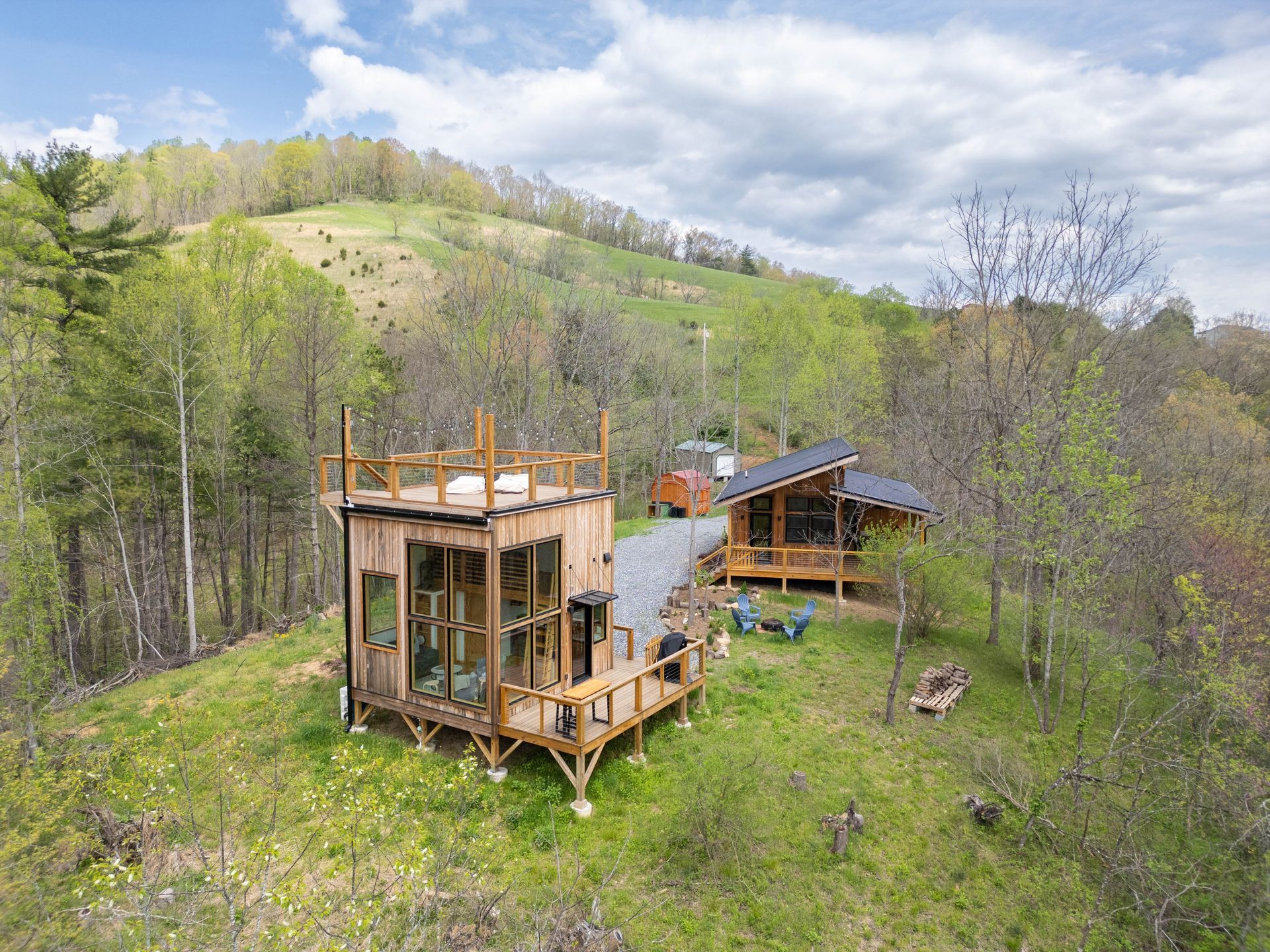
In Madison County, Mars Hill, and other parts of WNC, ridge-top and hillside parcels are common. They can absolutely be built on — but budget accordingly for the additional site work required.
Soil and Septic Suitability
In rural WNC, most properties rely on well water and private septic systems rather than municipal utilities. That means before you build, you need to know whether your soil will support a septic system — and not every lot will.
A soil evaluation (perc test) conducted by a licensed soil scientist determines whether the land can support a septic system and what type of system is required. This evaluation must be completed and a septic permit issued before a building permit can be obtained in NC.
This is one of the most common due diligence failures we see — buyers purchase land without a soil evaluation and discover after closing that the lot won't support a permitted septic system. Always get a preliminary soil assessment before you buy if you plan to build.
Road Access
Can you get to the building site year-round? In WNC's mountains, road access is not always a given. A few things to evaluate:
- Is the road maintained? County-maintained roads are plowed and graded. Private roads and driveways are your responsibility. Steep gravel roads that are passable in summer may be impassable in winter ice.
- Can construction equipment reach the site? Concrete trucks, excavators, and material deliveries need reasonable road access. A site only reachable by a narrow steep track adds cost and complexity to the build.
- Is there a recorded easement if the road crosses another property? Landlocked parcels with no recorded access easement create legal and practical problems that are expensive to resolve after purchase.
Utilities: Water, Power, and Septic
Most rural land in Western North Carolina requires private utilities. Here's what to evaluate:
- Well water: Well drilling costs in WNC vary significantly based on geology and required depth. Budget $8,000–$20,000 for a well, and verify that neighboring properties have successfully drilled at reasonable depths before purchasing.
- Septic system: As noted above, soil suitability determines whether a septic system is feasible and what type is required. Conventional gravity systems are the least expensive; engineered systems on challenging soils cost significantly more.
- Electrical service: Most parcels in WNC can connect to grid power through Duke Energy or a local co-op. The cost depends on distance from the nearest line. Remote parcels may require significant line extension — or make a solar + battery system the more practical option.
Zoning and Use Restrictions
As we covered in our blog on Madison County zoning, much of unincorporated WNC lacks county-wide zoning — but that doesn't mean there are no restrictions. Check for:
- Deed restrictions or covenants that limit use or structure type
- HOA rules if the parcel is part of a planned community
- Floodplain designation — parcels near rivers and streams in WNC may fall in FEMA flood zones that restrict or complicate building
- Municipal zoning if the parcel is within town limits of Marshall, Hot Springs, or Mars Hill
How Nanostead Can Help Before You Buy
Our consulting services include land assessment — helping prospective buyers evaluate whether a specific parcel is suited for the build they have in mind before they close on the purchase. We've walked dozens of properties across Madison County, Weaverville, Hendersonville, and the surrounding area. We know what to look for and what questions to ask.
If you have a parcel in mind or you're actively searching for land to build on in WNC, a conversation with our team before you sign is worth the time.
Schedule Your Free Consultation
Call us at (828) 649-8098 or contact us here to schedule your free 30-minute design consultation. We serve landowners and prospective buyers across Western North Carolina — from Marshall and Hot Springs to Asheville, Weaverville, and beyond.