Building in Marshall? Consult with Nanostead First

Thinking about building in Marshall, NC? It’s exciting, but also a bit tricky. There are steep slopes, flood zones, and zoning rules to navigate. Can you build on your lot? Can you go off-grid? There’s a lot to figure out before breaking ground.


Nanostead, a local company based in Marshall, works with people across Western North Carolina to build small homes that fit the land. 


Partnering with a builder who knows the area can save time, money, and stress from the start
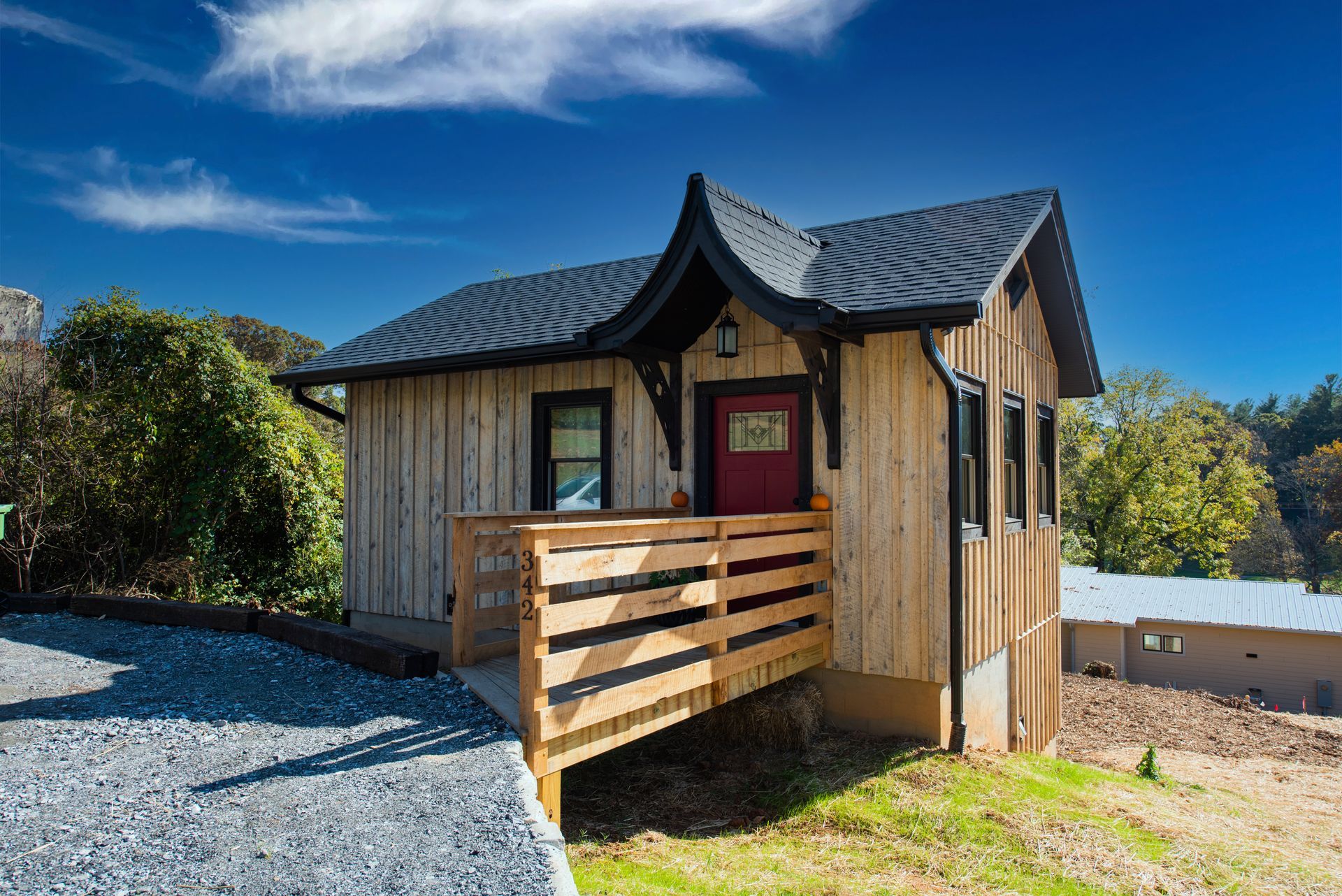
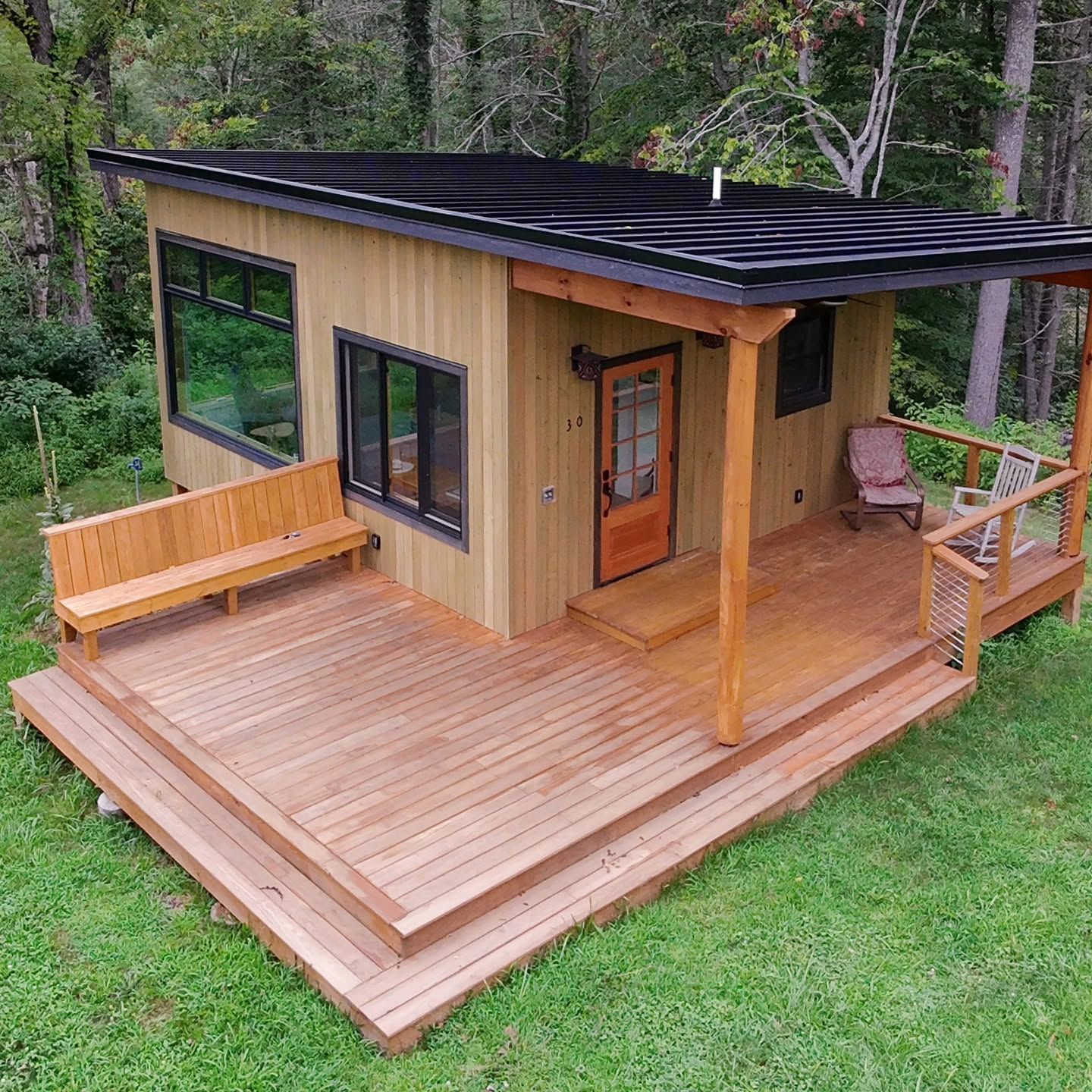
Off-grid tiny cabin in Marshall, NC, built by Nanostead featuring vertical wood siding, black trim, a red front door, and a steep curved roof set on a sloped gravel lot with trees and blue sky in the background.

Why Building in Marshall, NC Is Unique

Not Flat, Not Simple

Marshall isn’t like a cookie-cutter subdivision. You’re likely dealing with:


  • Hills and steep elevation
  • Soils that may not support septic systems
  • Properties near flood zones or streams
  • Zoning and setback restrictions by the county


Local insight is critical. Nanostead understands the geography and can help guide your build from the beginning.

What Nanostead Specializes In

Smaller Homes, Smarter Layouts

Big houses don’t always make sense on sloped land. Nanostead focuses on:


  • Compact, efficient layouts
  • Materials designed for mountain conditions
  • Homes that follow the land’s natural shape


These homes are ideal for those looking to live simply, save money, and enjoy a lower-impact lifestyle. Check out our Primary Dwellings here..

Avoiding Zoning Issues Early On

Don’t Let Permits and Paperwork Slow You Down


The most common hurdles new builders face in Marshall include:

  • Building in a flood zone
  • Soil that fails a perk test
  • Incorrect assumptions about land use


Nanostead helps you:

  • Understand what's legal on your land
  • Communicate with the county when needed
  • Avoid costly redos and legal setbacks

Thinking Off-Grid? Plan It the Right Way

What Off-Grid Involves


Living off-grid in Madison County is doable, but only with proper planning. Nanostead helps with:


  • Rainwater collection and storage
  • Solar power with battery backups
  • Composting or low-flow toilet systems
  • Backup heat sources like wood stoves


We’ve built successful off-grid homes that function year-round, even through winter.

What If Your Land Has Problems?

Steep Slopes, Erosion, or Flood Zones

If your land is on a hillside or near water, you’ll need a solid site plan. Nanostead walks the property with you to check:


  • Drainage and runoff patterns
  • Buildable, stable areas
  • How to prep the land without waste


We can also help level areas, recommend access improvements, and make sure you’re building in the right place from day one.

A Custom Home That Works With the Land

Start With What You Have, Not a Generic Blueprint


Nanostead doesn’t push pre-designed plans. Instead, we ask:


  • How do you want to use your land?
  • What kind of space do you need?
  • What’s your build budget and timeline?


From there, they create a site-specific design that fits your goals and your location.

If you’re still weighing what matters most in a home build, this guide on what to consider when building your own home offers a helpful overview.

The Process: What to Expect When You Call Nanostead

Step-by-Step Support From Start to Finish


Here’s how the process usually goes:


  1. Initial phone call to go over your land and needs
  2. On-site visit to walk the property and assess the terrain
  3. Design and planning phase with your input
  4. Permit handling and county approvals
  5. Project management through construction


It’s a full-service approach that keeps your build on track.

Frequently Asked Questions

  • Can I build a house in Marshall without city water or power?

    Yes, if your land is set up right. Nanostead can help you build off-grid the right way.

  • What if my land is in a flood zone?

    You can still build, but you’ll need to follow the rules. Nanostead helps you plan arou

  • Is it okay to use a composting toilet in North Carolina?

    In some places, yes. Nanostead helps you get it approved.

  • How small can my house be?

    Some areas allow homes under 400 square feet. Nanostead knows what’s allowed.

  • Do I need a permit for a cabin or tiny home?

    Yes. Most builds need a permit. Nanostead takes care of that.

  • Can I use my land for an Airbnb?

    Maybe. It depends on the local rules. Nanostead can help you find out.

Talk to Nanostead Before You Build

Building in Marshall isn’t always easybut you don’t have to figure it out alone. Nanostead knows the land, the weather, and the rules. We’ll help you make a plan that works.


If you’re building a small home, a cabin, or something off-grid, we’re ready to help. Contact Us to get started today.

Let's talk about your vision.
Free Consultation

Nanostead Blog

September 29, 2026
More people across Western North Carolina are asking the same question: do I really need all this space? Maybe the house feels too big since the kids moved out. Maybe you own land in Madison County and want to build something simple on it. Or maybe you're just tired of paying to heat, clean, and maintain rooms you never use. A tiny home isn't for everyone — and that's okay. But for the right person, it can be one of the best decisions they ever make. At Nanostead, we design and build custom tiny homes on foundations from 300 to 1,000 sq ft across Asheville, Marshall, Weaverville, Mars Hill, Hot Springs, and the rest of WNC. Here are seven signs you might be ready. 1. You Use Only a Few Rooms in Your Current Home Walk through your house and count the rooms you actually use every day. For most people, it's the kitchen, the living room, a bedroom, and a bathroom. Guest rooms, formal dining rooms, and extra closets often sit empty most of the year. If that sounds familiar, a well-designed small home can give you everything you use — without the space you don't. Good design matters more than square footage. Our designer, Kevin Ward, plans every layout around how you actually live, using lofts, high ceilings, smart storage, and multi-functional spaces to make a small footprint feel open. 2. You Want Lower Monthly Costs A smaller home means less to heat, cool, clean, and repair. Every Nanostead home is built with energy-efficient systems and insulation, and our builds are Green-Built certified through the Green Built Alliance — so the savings aren't just about size. If you're curious about what a custom build costs up front, our tiny home pricing page breaks it down by square footage. And if you're wondering how to pay for it, our guide to tiny house financing is a good place to start. 3. You'd Rather Spend Time Outside Than Inside Western North Carolina is made for being outdoors. Many of our clients care more about the porch, the deck, and the view than about an extra bedroom. That's why so many of our designs extend the living space outside. Our Independence Boulevard home in Swannanoa, for example, has a large wrap-around deck. Our Paint Rock Road build in Hot Springs includes a covered porch, an outdoor soaking tub, and even an in-ground greenhouse. When the outdoors is part of the design, a small home never feels small. 4. You're Ready to Let Go of Clutter This is the honest one. Downsizing means deciding what really matters to you and letting go of the rest. For many people, that process feels freeing — fewer things to store, organize, and worry about. You don't have to give up everything, though. Built-in storage and custom cabinetry go a long way in a tiny home. For practical ideas, check out our 25 smart space-saving tips . 5. You Own Land (or Want To) and Want to Build Something That Fits It Many of our clients already own a piece of land in WNC — family land, a mountain parcel, or a lot they've been holding onto. A tiny home is often a realistic way to finally build on it. Because every Nanostead home is custom, the design fits your specific site: the slope, the views, the sun, and the access. If your land has open questions about zoning, utilities, or site prep, our consulting services can help you sort those out before design starts. 6. You Want Quality Over Quantity A smaller home lets you put your budget toward the things you'll see and touch every day. Instead of paying for extra square footage, you can invest in details: custom woodwork, better windows, high-end fixtures, and materials that last. Our West Glendale Avenue cottage in Burnsville is only 256 sq ft, but it features reclaimed windows, heartwood pine floors, copper and brass accents, and walnut woodwork made by local artisans. Small doesn't mean basic. 7. You Need Flexibility for the Next Chapter A tiny home can serve different purposes over time. It can be your full-time home, a place for aging parents, a guest house, a home office, or a rental. Our Edgemont Road project in North Asheville is a 384 sq ft backyard studio that works as both an office and a guest house. If you're thinking about building next to an existing home, read our guide to ADUs in Western North Carolina . A Few Honest Questions to Ask Yourself First How many people will live in the home, and do they need separate bedrooms? Do you work from home and need a dedicated space? Are you comfortable with a loft, or do you need a main-floor bedroom? What will you do with the things that won't fit? Do you already have land, or will you need to find it? There are no wrong answers. These questions just help shape the right design. For more on day-to-day life in a small home, see our post on the benefits of living in a tiny home . Talk to Nanostead About Downsizing in WNC If you saw yourself in a few of these signs, the next step is a conversation. Our free 30-minute design consultation is a no-pressure way to talk through your goals, your land, and your budget. Explore our design services , schedule at nanostead.com/book-now , or reach out through our contact page . Give Jeramy a call at (828) 649-8098 .